
COLUMN - Melton In Bloom with Marie Walters
The extreme heat and drought conditions have really put our new Dry Bed project to the test.
The prepared front section was planted up and watered well by our volunteers last November.
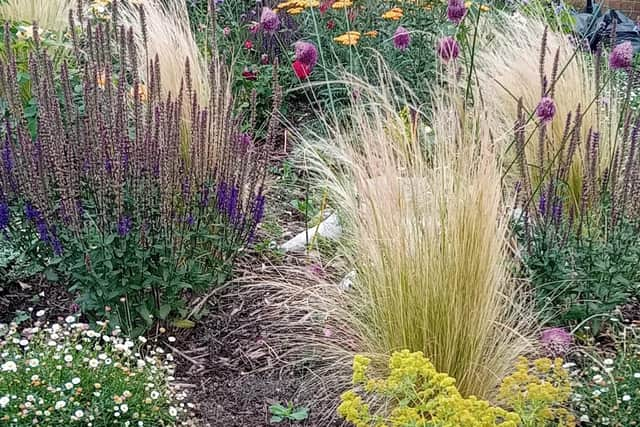

We added lots of organic matter, and mulched with bark chips whilst the soil was wet, to retain as much moisture as possible.
The choice of plants was crucial, of course, and the results have been excellent.
We have only just watered the bed again since the original planting, to help the floral display last that little bit longer.
Of course all new plantings should generally be watered regularly for the first 12 months, whilst everything settles in and puts down roots, so this project has fared very well so far.
During last year’s heat and drought, we noticed that roses, in particular, coped very well, being deep-rooted, so we chose two varieties of English shrub roses – crimson-red Thomas a Becket and apricot The Lark Ascending.
Both are repeat-flowering; the latter being particularly attractive to bees and also produces hips for the autumn.
Then we chose perennials that cope with drier conditions, which include Alchemilla mollis, Salvia Caradonna, Erigeron karvinskianus, Achillea Walther Funcke and Verbena bonariensis.
Euonymus Emerald Gaiety (small shrub) provides variegated evergreen interest, together with Yucca filamentosa.
For further interest, we have lovely Stipa tenuissima grasses, with fine creamy seed heads that waft in the breeze.
Most varieties of salvia, achillea and verbena are suitable; it doesn’t have to be the ones we chose.
This autumn, we will be looking to add to the floral display by planting lots of spring-flowering bulbs, such as crocuses, species tulips (and others that are considered almost perennial), specific varieties of daffodils, oriental hyacinths and some more unusual summer species such as pineapple lilies, to give a hint of something a little more tropical.
The rear section of the border is yet to be dealt with, but we were recently given a lovely bug house, which was donated by one of our ex-volunteers, and it has now been installed.
You can follow the work of the Melton In Bloom team on their Facebook page.