
Making Stilton is a labour of love at Long Clawson
Seeing at close quarters how Stilton cheese is made at Long Clawson Dairy is a real eye-opener.
From the moment milk is delivered to the factory from dozens of local farms it is a fascinating process which ends with the iconic blue veined product.
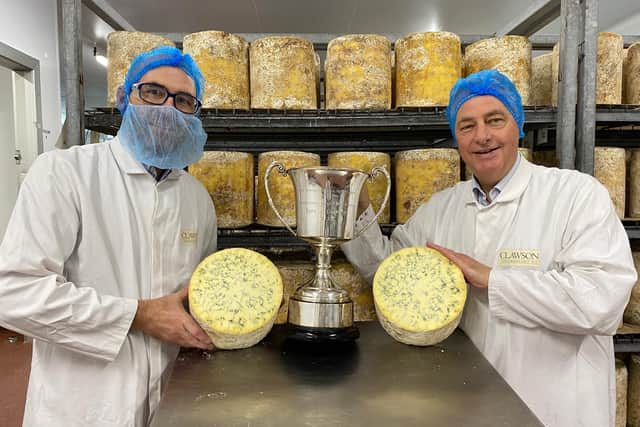

My overriding memory from my couple of hours at the dairy was the meticulous sanitisation protocol every visitor has to go through.
Hair and mouth nets are obligatory and hands must be washed multiple times as you move through the plant.
My guide was Kim Kettle, who has worked there remarkably since 1976 and has filled many different roles in that time.
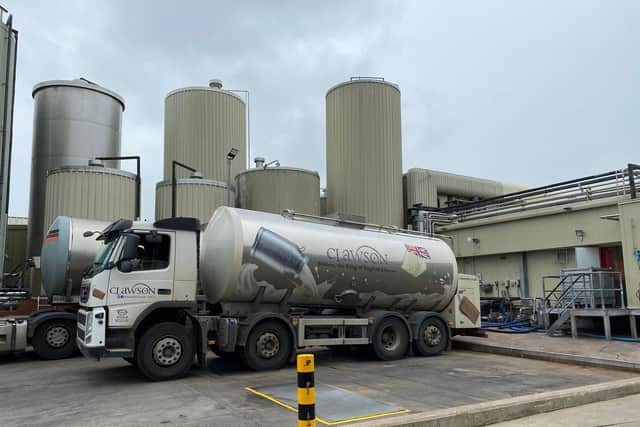
The process begins with tankers carrying 20,000 litres of milk from dairy farms in the area.
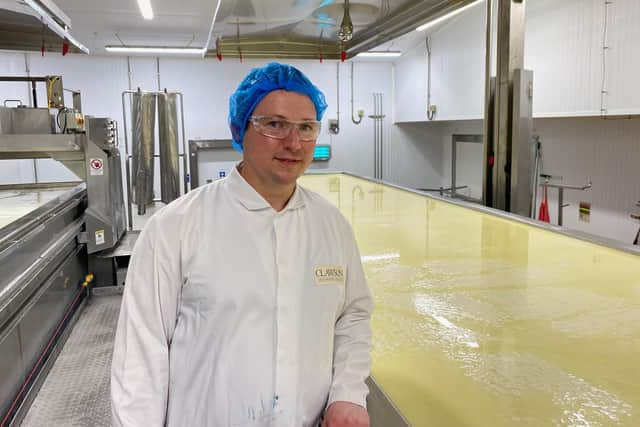
After it is poured into an open vat there are certain ingredients added to help stimulate the distinctive blue mould.
Curds begin to form and they are left to drain overnight after the whey is removed.
The curds are then dropped into cylindrical hoops and allowed to drain for several days - staff turn them regularly using machinery to ensure moisture spreads evenly through the cheese.
In this production area, the heat and humidity is oppressive when you are wearing the head coverings and a lab coat but it is essential for getting the mould to form.
After five days, the cheese is removed from the hoop and sealed by smoothing or wrapping to keep the air out.
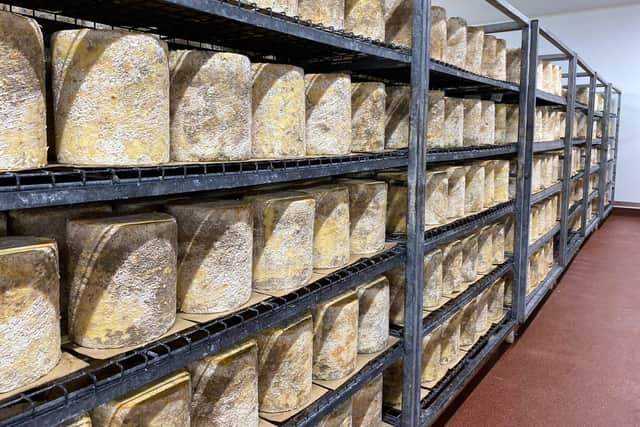
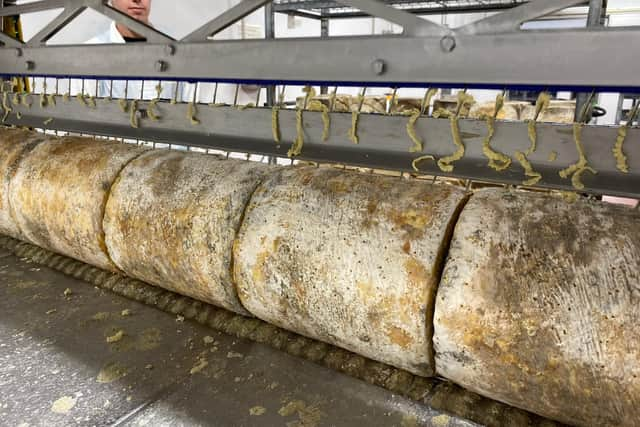
There is another temperature change as the growing Stilton is transferred to a much cooler room where they are turned by hand for about five weeks.
After this, In the maturation room, a machine inserts multiple stainless steel needles into the cheese to allow oxygen to enter to help the blue mould form.
There is a pungent smell of ammonia from the stored cheese in this department.
Every Stilton is then graded with the insertion of a long tool to withdraw a sample of the cheese. This differs from many other cheeses where only a small number from each batch are subject to grading.
Around one per cent does not make it to sale - it is sold instead to make cheese powder for food service.
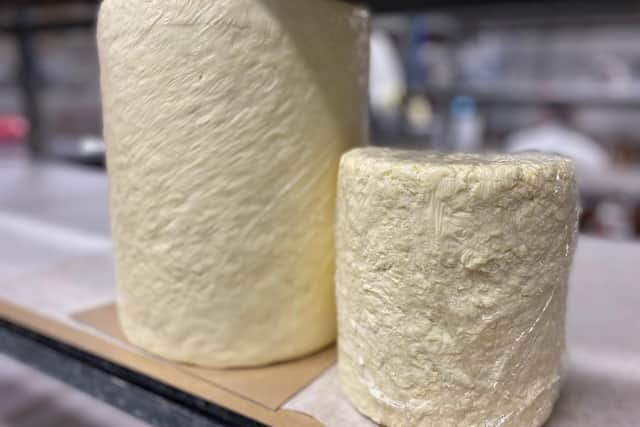
They produce Stilton in two sizes – 8k or the 2kg baby one, which sells well in France.
It is mostly allowed to matured for eight or nine weeks but some customers ask for a 14-week maturation process to suit their taste.
The final matured Stiltons progress to the final stage, where staff cut it into packs, using intelligent machines, before it is labelled and packed for distribution in one.
This is all carried out in one line in a purpose-built building which went up in 2016.
Some of the Stilton is sold at the on-site shop, which is open Thursday through to Saturday.
Around 20 per cent of all cheese is exported abroad with North America a particularly big market.
It is a hive of activity at the Clawson dairy, where 360 people are employed, with 90 working at the firm’s Bottesford site.
The Clawson production process runs 24/7.
Making Stilton is clearly a labour of love for the team at Long Clawson.