
Hospitals trust responds to being ranked poorly in national league table
The trust which manages Leicester’s hospitals says it has ‘ambitious plans to improve care’ after it ranked poorly in new NHS national league tables.
The University Hospitals of Leicester NHS Trust (UHL) was rated joint 101st of 134 acute NHS trusts in performance rankings published for the first time by the government.
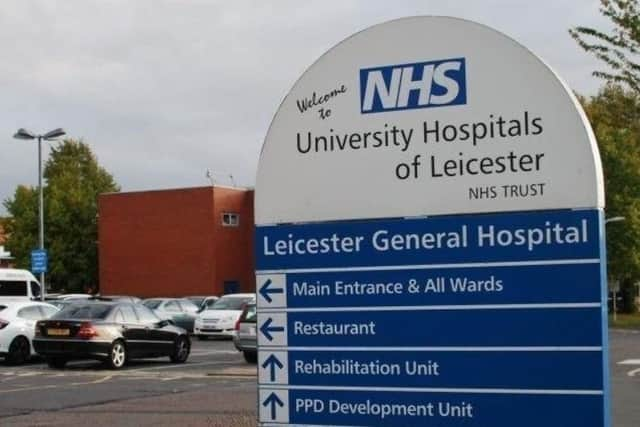

It narrowly missed out on being included in the category of worst performing trusts.
UHL told the Local Democracy Reporting Service (LDRS) its rating reflected ‘ongoing challenges with finance and access to services’.
The city’s three hospitals performed better, however, when it came to effectiveness and experience of care and the experiences of its workforce.
Trust chief executive officer, Richard Mitchell, said the organisation has ‘ambitious plans to improve care’ locally, and that those improvements are ‘well within reach’.
The government’s ranking reveals particular concerns around cancer treatment, with the trust coming in 15th from bottom in the league table for the percentage of patients being treated within the 62-days-from-referral target.
It also came in 103rd of 131 trusts for the percentage of cases were patients were waiting 18 weeks or fewer for elective – non-urgent – care.
The trust also performed below average for the number of patients spending 12 hours or more in A&E, the percentage of people waiting more than 52 weeks for elective care and the percentage of urgent referrals which received a definitive diagnosis within the four-week target.
On its finances, the trust is showing a deficit in its 2025/26 budget, putting it in the lowest category for that performance area, known as ‘segment four’.
However, the trust came above average for the time it takes for patients to be discharged and for its in-patient satisfaction rates.
Trust chief executive officer, Richard Mitchell said: "While financial challenges keep us in segment 3 (overall) of the National Oversight Framework, we are rated in the highest performing segment for effectiveness and experience of care and people and workforce.
“The measures underpinning the framework align with our three annual priorities: transforming patient care, strengthening our culture, and delivering our financial plan. With continued focus and collective effort, further improvement is well within reach.”
While UHL ranked poorly in the league table, Leicestershire’s two other NHS trusts performed well compared to similar organisations.
East Midlands Ambulance Service (EMAS) came second of 10 ambulance trusts and was lauded as ‘high performing’ by the government.
Among its successes was a high number of patients being treated in the community, rather than being taken to hospital. It also scored well for financial management and staff feedback.
However, concerns were identified around response times, with EMAS just missing the 30-minute objective for category two calls with an average of 32.63 minutes and ranking eight of 10 trusts for this indicator.
Category two calls include strokes and heart attacks. It also had a comparatively high absence rate among staff, ranking seventh for this.
Richard Henderson, chief executive at EMAS, said the ranking was ‘testament to the dedication, compassion and professionalism shown every day by my colleagues and volunteers working across EMAS’.
He added: “We remain focused on listening to and acting on patient and staff feedback, addressing the pressures we face daily, and finding ways to further improve our service.”
Leicestershire Partnership NHS Trust (LPT) is responsible for mental health and special needs care in the county. It ranked joint 17th of 61 trusts in its category.