
Historic vagrant cell tourism feature installed
A new historic tourism feature has been installed in Melton Mowbray as part of the housing development on the site of the former St Mary’s Hospital.
When Snowdon Homes was given permission to build 38 new homes on the Thorpe Road site it initially planned to demolish all the former vagrant cells, which provided overnight accommodation for homeless people from 1895.
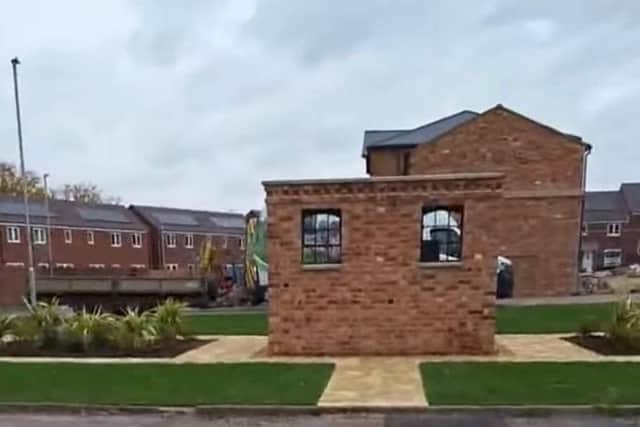

But campaigners fought to retain the cells as an important part of the town’s history and a compromise was reached to keep parts of one of the structures as part of the development.
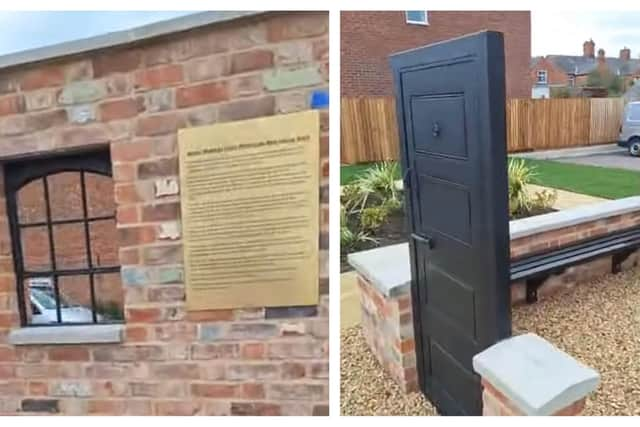
Melton Borough Council kept a watching brief on the scheme and the planning committee approved a cell display with three sides and a door but no roof.
Councillor Margaret Glancy, who campaigned with fellow ward councillor Simon Lumley on the project, commented: “Our heritage is so important, sadly we cant always save everything but this is a win.
"By working together and not giving in we saved the workhouse and successfully achieved a memorial to the vagrant cells.
"A huge thank you to everyone who helped achieve the end result.”
Petitions signed by thousands of residents forced a rethink to keep the visitor feature, which uses brickwork from the original cells and includes an information plaque on the back wall written by The Heritage Society.
St Mary's Hospital was opened on the site in 1836 as a Poor Law Hospital – it was also known as the Union Workhouse serving the Melton Mowbray and surrounding parishes.
The old workhouse building has been converted into eight of the new properties with traditional elements retained.
Local historian, Brian Fare, in his study of the hospital site, wrote: “Between the main hospital building and the main road was a separate building known as the tramp cells or vagrant cells.
"It is believed that these were still in use up to the 1950s.
“A bell was rung at 6pm and after that, the tramps were locked in their cells and given a meal and a bed for the night.
"The next day, they had to chop logs or break up stones into small enough pieces so they could fit through a grill.
“They couldn't stay for more than one night and were given a token and sent on their way.”