
New book on historic Melton Navigation contains 30 years of research
A new book has been published on the history of the Melton Navigation containing 30 years of research.
Former Melton resident Bob Payne has published a detailed book on the history of the Melton Navigation – more than 30 years after he began the research, writes Geof Malone of Melton & Oakham Waterways Society (MOWS).


The Navigation enabled horse-drawn barges to bring cargo from all over the country into the town centre during the 1800s.
Although there have been previous books which have featured the Navigation history, there has been nothing nearly as detailed as Bob’s 312-page ‘By Water To Melton Mowbray’.
“It was a significant part of Melton’s history and brought a period of economic development and social change and I wanted it recorded as part of the town’s history,” said Bob.
A former history teacher, he arrived in Melton in 1968 to work for the local authority education service and became fascinated by the abandoned Navigation, which had ceased operation in 1877.
As a tutor, he ran courses on the subject as well as other aspects of Melton’s history in the 18th and 19th centuries.
By the time he was nearing retirement, Bob already had an in-depth knowledge of the Navigation but was determined to find out more.
Those who have written on the subject before have all commented on the fact that the Navigation company’s records had either been lost or disposed of.
Bob spent countless hours trawling records in archives and universities searching for any mention of the Navigation and its adjoining waterways, the Leicester Navigation and the Oakham Canal, which were closely intertwined.
The result is a book crammed with fascinating detail, not only for the keen canal and boating fraternity but for all interested in the social and economic history of Melton during the 18th and 19th centuries.
Bob writes that this period ‘must have been the most important happening in the life of the town and its neighbouring communities, opening it up to the influences, the ideas and the material goods of a world which had hitherto been distant and relatively unknown’.
He finds detail about how the Navigation came into being and operated between 1797 and 1879, the challenges it faced, court cases which ensued, about the boats and their crews, the cargoes they carried and the people involved.
Some names are still familiar today. Solicitor Charles Latham was involved throughout his working life as the company clerk and when he died in 1842, his son William took over and had to deal with the demise of the Navigation when the railway arrived in 1846.
Like his father, William wore many hats in the local community.
Because all barges going to Oakham had to first travel along the Melton Navigation before connecting with the Oakham Canal, there were many common issues to be settled and, as clerk, William would be tasked with writing to the Oakham company.
Communication was swift: the clerk of the Oakham company was none other than… William Latham!
The first toll collector at the start of the Navigation near Cossington, where it joins a branch of what is known today as the Grand Union Canal, was Joseph Ferneley a brother of the artist to the nobility, John Ferneley.
Their father, the village blacksmith in Thrussington, built up a thriving coach building business and the family became involved in the timber business, operating from a wharf on the Navigation.
In Melton there were two wharfs around the Basin which was the terminus of the Navigation and the start of the Oakham Canal.
It was situated where the Heritage Garden now stands, outside the borough council offices.
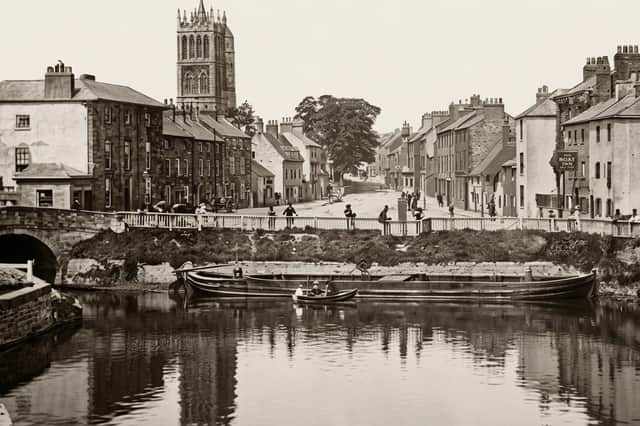
Bob Payne says the opening of the New Wharf in 1836 ‘marked a high point in the commercial and trading life of the Navigation Company’.
It was built by Edward Burbidge, former landlord of the George Hotel, then the leading inn in the town.
It became a hive of activity, with warehouses and wharves, builders and carpenters’ yards, coal yards and grain stores, as well as inns and beer houses.
Goods unloaded from the horse-drawn barges could quickly be distributed to shops around town and neighbouring villages.
Burbidge, himself, became a coal merchant and trader in agricultural products and a leading town citizen.
But, just 10 years later, Melton Railway Station opened and trade on the Navigation went downhill from then on.
The company fought back with reduced cargo rates but it was not enough and in 1879 an act of Parliament allowed for its closure.
The railway company bought the basin and much of the surrounding wharves.
The basin had been a health hazard for many years.
With the closure of the Oakham Canal and fewer barges, there was little water movement and it became stagnant and smelly and there were fears of an epidemic.
It was eventually filled in by the railway company.
Bob has unearthed remarkable detail about the Melton Navigation.
Having done nothing with it for 30 years, it was his son, Geoff, who persuaded and helped him turn it into a book and the result is a valuable addition to the chronicling of the history of the town.
You can buy ‘By Water to Melton Mowbray’ at Foxy Lots, in King Street, and Ye Olde Pork Pie Shoppe, in Melton - it is also available by post from the Railway & Canal Historical Society (rchs.org.uk).