
Remnants of dinosaurs and Roman artefacts among the finds in bypass digs
Remains of dinosaurs, remnants from a Roman farmstead and countless artefacts from past civilisations have been unearthed by archaeologists during the construction of Melton’s new relief road.
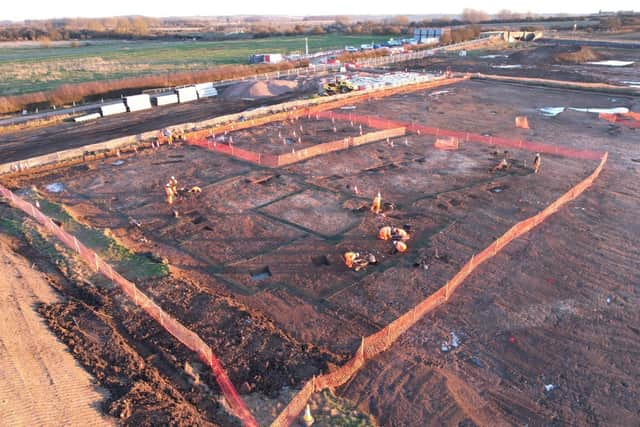
Eleven areas were identified in various locations on the outskirts of the town and these digs have revealed significant details about the history of Melton Mowbray going back millions of years.
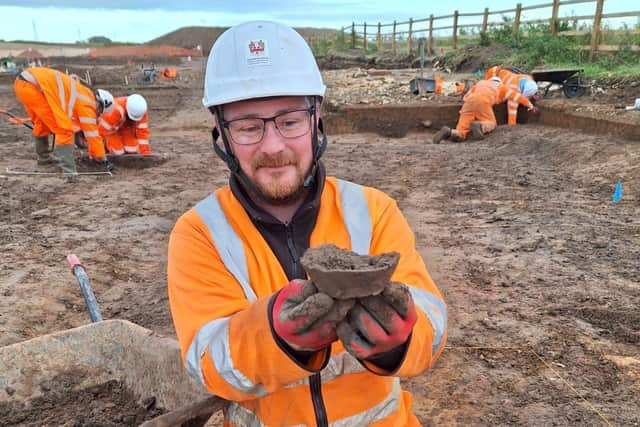

Archaeological Research Services Ltd (ARS Ltd) was commissioned by contractors Galliford Try, on behalf of Leicestershire County Council, for a scheme of mitigation works on the North and East Melton Mowbray Distributor Road Scheme. The work uncovered natural and archaeological features ranging in date from the prehistoric to modern periods.
Among the oldest discoveries were two fossils from an Ichthyosaur, a large marine dinosaur reptile – a snout unearthed north of Melton Country Park and a vertebra found near the railway line where it crosses Lag Lane.
These probably dated to the Lower Jurassic era and had been moved by glacier and deposited at Melton within drift geology, probably in the Palaeolithic period three million years ago, the dig team believe.
Evidence of an important prehistoric landscape, dating from the Upper Palaeolithic to the Middle Bronze Age, was found near to the River Eye.
In some of these digs, there were several pits dated to the Late Neolithic and Early Bronze Age and six cremations of probable Early and/or Middle Bronze Age date, which formed part of a flat cemetery.
Archaeologists unearthed a significant number of worked flints, basic tools used by people living in the area going back up to 10,000 years ago.
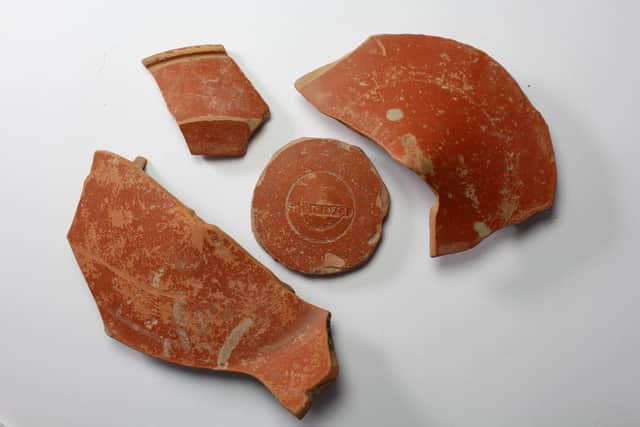
One of the most impressive excavations was close to Nottingham Road close to the site of a previously known probable Iron Age and Roman farmstead, which was otherwise unaffected by the scheme.
Large quantities of Roman pottery and animal bone, fragments of a clay oven, a loom weight, a bone comb and a metal brooch were among the items dug up.
Part of an Early to Middle Anglo-Saxon settlement, which dated from the 5th century AD, was found on land between Saxby Road and the railway line.
The site archive will be deposited with the Leicestershire Museum Archaeology Collection, apart from the two Ichthyosaur fossils, which will go to Leicester Museum.